Door Hardware and Exit Device Repair in Charlotte, NC
Hardware complaints arrive as replacement requests. The door slams, so the closer is broken. The door will not latch, so the lock is broken. The exit device rattles, so the exit device is broken.
Describe what the hardware is doing, not what you think it needs.
Nearly all of it is adjustment
In practice a large share of these are adjustments, and a further share are alignment problems where the hardware is fine and the door has moved. A closer that slams has usually had its sweep valve backed off by somebody who wanted the door to shut properly in winter. A door that will not latch has usually dropped an eighth of an inch on a worn top hinge and is now presenting the latch bolt below the strike opening.
None of that is exotic. It is just that nobody looks, because looking takes a technician and replacing takes a purchase order, and a purchase order is easier to get.
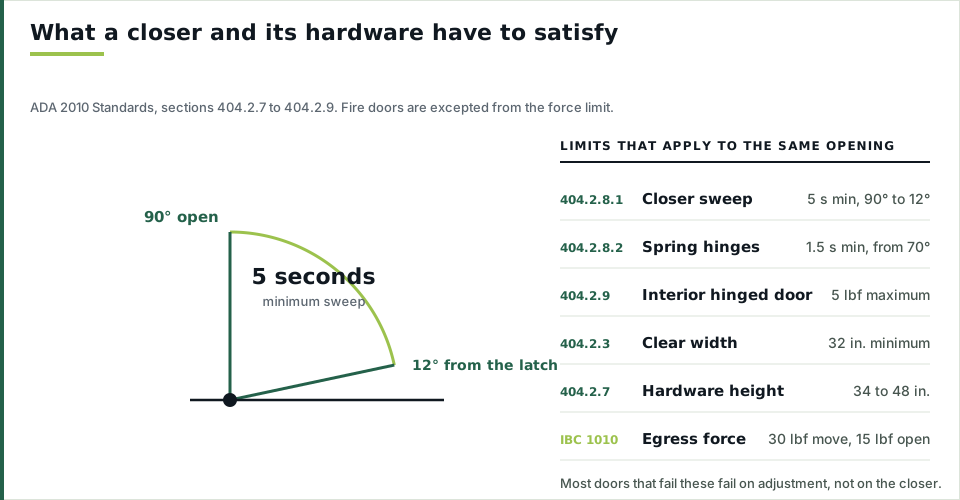
Time a closer against the ADA sweep minimum
Start the timer as the door passes the opening angle for the mode you picked, stop it as the door reaches the closing angle. The elapsed time is compared with the minimum in the ADA 2010 Standards. The timer runs in your browser and records nothing.
| Measurement | Limit |
|---|---|
| Door closer | 5 seconds minimum, from 90 degrees to 12 degrees from the latch (ADA 2010 Standards, section 404.2.8.1) |
| Spring hinge | 1.5 seconds minimum, from 70 degrees to the closed position (ADA 2010 Standards, section 404.2.8.2) |
Fire doors are exempt from the 5 lbf opening-force limit in section 404.2.9 because they need enough force to latch positively, and are set to the minimum force the authority having jurisdiction allows.
Hardware, condition, and what the standards require
Two standards families do most of the work here. ANSI/BHMA A156 grades hardware by tested cycle life and performance, and matching grade to traffic is the difference between a five-year opening and a fifteen-year one. The ADA 2010 Standards govern how the finished opening has to behave: section 404.2.9 caps interior hinged doors at 5 lbf to open, 404.2.8.1 requires a closer to take at least five seconds from 90 degrees to 12 degrees from the latch, and 404.2.7 puts operable hardware between 34 and 48 inches above the floor. Fire doors are exempt from the 5 lbf figure because they need enough force to latch positively, and should be set to the minimum the authority having jurisdiction allows.
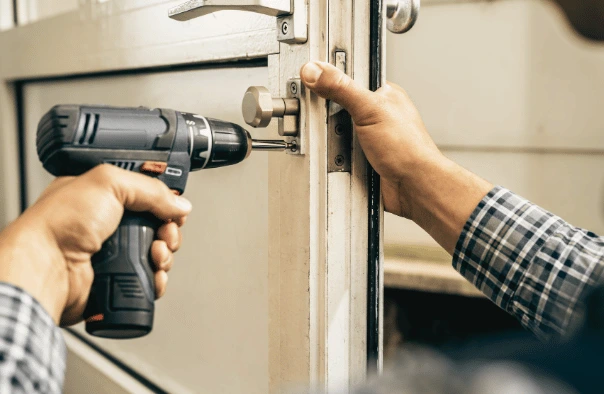
Panic bars and exit devices
A panic bar is an exit device, and the two words describe the same hardware: a push pad or touchbar that retracts the latch in one motion from the inside. That single requirement is what separates it from an ordinary lock. Whatever the outside trim does, whether it is locked, keyed, dogged or removed entirely, the inside has to release with one push and no prior knowledge of how the device works. Most of what goes wrong is mechanical and most of it is adjustment rather than replacement.
Ordinary locksets are specified around keeping people out. Exit devices are specified around letting people out, and the outside trim is a secondary question. That is why a lockset problem and an exit device problem rarely have the same fix, and why fitting a storeroom function lockset to an opening that wanted an exit device causes trouble later.
Hardware service, how it is billed
| Category | Basis | Typical outcome |
|---|---|---|
| Adjustment visit | Labor only | Multiple openings corrected in one trip |
| Like-for-like replacement | Parts plus labor | Same grade or better, matched to traffic |
| Grade upgrade | Parts plus labor, higher parts cost | Recommended where traffic outran the original spec |
| Listed product for rated openings | Parts plus labor, lead time varies | Non-negotiable on a rated assembly |
Buildings with more than a handful of openings usually do better on a scheduled adjustment pass than on individual reactive calls, because closers and strikes drift on a predictable timescale and get caught before they become latching failures.
How a hardware call runs
-
01Describe the behaviorWhat the door does, when it started, and whether anything changed around it. Call (984) 402-1347
-
02Read the openingHinges, leaf position, strike relationship, closer settings, frame condition. In that order.
-
03Adjust, then decideWhere adjustment holds, that is the repair. Where it will not, the part and the reason both get named.
-
04Verify against specSweep timed, force checked where applicable, latching confirmed from full open. Then written up.
What you get that you would not get elsewhere
What people ask about exit hardware
Is a panic bar the same thing as an exit device?
Yes. Panic bar, crash bar, push bar and exit device all describe the same hardware. Manufacturers and specifiers say exit device; almost everybody else says panic bar.
Our exit device stopped latching when the door closes. Is the device broken?
Often not. The usual causes are strike alignment after the frame or hinges have moved, a closer that is slamming or too weak to bring the door home, or mounting fasteners that have worked loose. Those get checked before the device is condemned.
Can a panic bar be repaired, or does the whole unit get replaced?
Adjustment and parts cover a large share of them. Latch projection, vertical rod adjustment, strike position and fastener tightening are routine. A bent chassis or a cracked mounting is a replacement, and you get told which one it is.
What does dogging mean, and why is it not allowed on some doors?
Dogging holds the latch retracted so the door pushes open freely without operating the bar. On a fire-rated assembly the device must be listed for fire door use and cannot be dogged, because the door has to latch to do its job.
Other work on the same openings
Adjustment stops being the answer once the leaf is dented past repair, the frame is out of square, or the opening was never right to begin with. At that point it is a new door and frame, measured before anything is ordered.
Talk it through before anybody quotes it
One opening or forty. Describe the behavior and we will tell you whether it is an adjustment.