Overhead and Coiling Doors in Charlotte, NC
A coiling door that has become hard to operate did not become hard to operate this week. Somebody has been fighting it for months, then somebody else propped it, then it got chained open because propping stopped working, and by the time it is reported the curtain has been running out of the guides long enough to deform the slats at one edge.
Say which door type it is and what has changed.
Dock doors do not fail suddenly. They get ignored gradually
The useful thing about this pattern is that it is legible. A door tells you what has been happening to it. Wear on one guide and not the other, a curtain that tracks left, spring tension that no longer balances the door at mid-travel, a bottom bar that has been hit and never straightened. Read in order, those point at the cause rather than the symptom.
There is also a safety line here that is worth being blunt about. Spring work on these assemblies stores a great deal of energy and it is not a maintenance-staff job. Neither is a rolling steel fire door drop test, which has to be performed and documented properly to count.
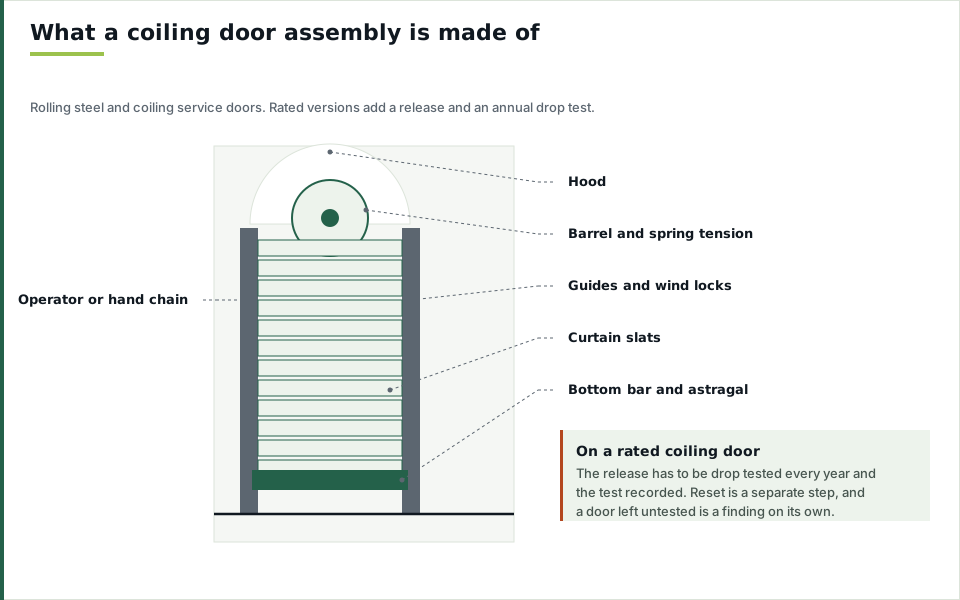
Assembly types and what goes wrong on each
Coiling doors, sectional overheads, and rolling steel fire doors look adjacent and behave differently. A coiling door concentrates its wear in the guides and the barrel. A sectional door concentrates its wear in the hinges, rollers, and track alignment, and telegraphs problems through section gaps long before it fails. A rolling steel fire door spends its life as a normal service door and then has to perform exactly once, which is why the annual drop test exists and why it is a separate record from anything else in this scope.
Coiling and overhead pricing variables
| Work | How it prices | What can change it |
|---|---|---|
| Service call and adjustment | Labor, single visit | Access, height, dock congestion |
| Spring replacement | Parts plus labor, by cycle rating | Door weight, spring specification |
| Curtain or section replacement | Quoted after inspection | Damage extent, availability, lead time |
| Track and guide correction | Labor, occasionally with parts | Whether the mounting structure moved too |
| Rolling steel drop test | Per door | Count, and whether resetting requires two people |
Doors on a scheduled program cost less per incident, mostly because the incidents that get expensive are the ones that ran unreported for a season.
How a dock call runs
-
01Identify the assemblyCoiling, sectional, or rolling steel fire door, and roughly what size. Call (984) 402-1347
-
02Describe the changeHarder to operate, tracking off, stopping short, noise, or an impact event. Timeline matters.
-
03Inspect under operationThe door gets cycled and watched. Balance, tracking, guide wear, and spring condition read in that order.
-
04Correct or quoteAdjustment on the visit where that is the answer. Parts quoted with the lead time stated.
-
05RecordFindings and any test results written against the opening in your register.
What you get that you would not get elsewhere
Other work on the same openings
Talk it through before anybody quotes it
Have the door type, rough dimensions, and whether it is fire rated.