New Door and Frame Installation in Charlotte, NC
The request almost always arrives as a door. The frame is warped, or the leaf is dented past repair, or a tenant wants the entry to stop looking like 1998, and the assumption is that a new slab solves it.
Have the opening dimensions if you can get them.
You are rarely buying a door. You are buying an opening
Sometimes it does. Often the door was the symptom. Frames move, buildings settle, anchors work loose, and a jamb that is out of plumb by a quarter inch will make a brand new door bind exactly the way the old one did, only now you have paid for it twice.
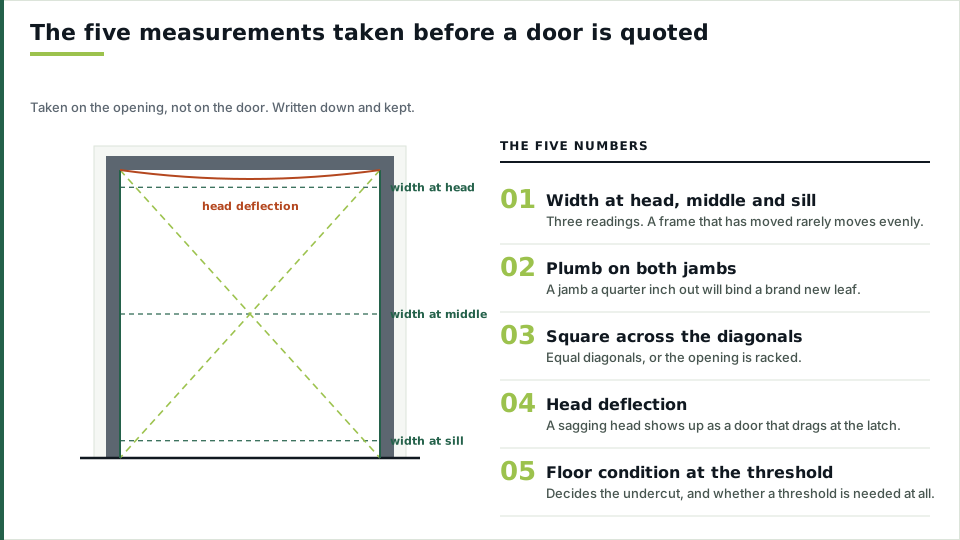
So the first thing that happens is a measurement, written down, of the opening rather than the door. Width at head, middle, and sill. Plumb on both jambs. Square across the diagonals. Head deflection. Floor condition at the threshold. Five numbers that decide whether this is a leaf swap, a frame replacement, or an opening that needs rebuilding before anything hangs in it.
Which ANSI/BHMA grade band suits the opening
Pick the opening type and roughly how many times it is used a day. The result is the grade band normally specified for that duty, and what separates the bands. This is specification guidance, not a code requirement, and it is worked out in your browser.
| Measurement | Limit |
|---|---|
| Grade 1 — Heavy duty | Specified for continuous traffic, for openings where a failure locks people out or in, and for most rated assemblies. The highest tier for operational, strength, security and finish testing in the A156 series. |
| Grade 2 — Medium duty | Specified for moderate traffic in lower-risk positions. Tested to the same categories as Grade 1 against a lower threshold. |
| Grade 3 — Light duty | The lowest commercial tier. Fitted to a high-cycle entrance it will produce a repeat service call, which is usually more expensive than the difference in the original spec. |
No cycle counts are quoted here on purpose. The tested cycle figures live inside the paid ANSI/BHMA A156 standards, they differ by product category, and the numbers repeated on supplier websites disagree with each other. Grade bands are given by duty instead, which is how they are specified in practice.
What we install, and what governs it
Installation scope here covers hollow metal doors and frames, aluminum storefront entries, and fire-rated assemblies. Each carries its own constraints. Hollow metal is forgiving to install and unforgiving about anchoring. Aluminum storefront is sensitive to squaring and to threshold detail, and it telegraphs a bad install within one season. Rated assemblies are governed by the listing before anything else: the door, frame, hinges, closer, latching hardware, and glazing all have to be listed for use together, per NFPA 80 section 6.4, and a substitution made for convenience on site can void the rating on the whole assembly.
What moves an installation number
| Element | Effect on price | Confirmed when |
|---|---|---|
| Leaf only, existing frame sound | Lowest scope available | After plumb and square are measured |
| Frame replacement | Substantial step up, wall condition dependent | After the wall opening is exposed or probed |
| Fire rating on the assembly | Restricts product and hardware options | From the existing label, or from occupancy drawings |
| Access hours and occupancy | After-hours and escorted work priced separately | At scheduling |
Lead time is the variable people underestimate. Standard hollow metal moves quickly. Rated assemblies in non-standard sizes, specific finishes, and anything requiring factory prep can run weeks, and you are told the number before approving rather than after.
How an installation runs
-
01Describe the openingLocation, what is there now, why it is being replaced, and whether it is rated. Call (984) 402-1347
-
02Site measureThe five numbers, plus wall type, threshold condition, and how the opening is used through a day.
-
03Specify and quoteProduct, hardware set, and lead time in writing. Rated work names the listing it is being supplied against.
-
04Order and scheduleDelivery confirmed before a crew date is set, so nobody blocks your corridor waiting on a truck.
-
05InstallFrame set and anchored, door hung, hardware fitted, and the opening cycled and adjusted before anyone leaves.
-
06RecordOpening number, product data, label details where applicable, and final measurements appended to your register.
What you get that you would not get elsewhere
Other work on the same openings
A fair number of calls that arrive asking for a new door end as an adjustment. If the leaf and frame are sound and the complaint is latching, dragging or a door that will not stay shut, that is hardware repair and adjustment rather than replacement, and it is a great deal cheaper.
Talk it through before anybody quotes it
Have the location and rough opening size ready, and say whether the door is rated if you know.