Fire Door Inspection in Charlotte, NC
NFPA 80 requires fire door assemblies to be inspected and tested annually, and requires the findings to be documented in writing and kept available. Buildings get cited on the second half of that sentence far more often than the first.
Say roughly how many rated openings you have.
The inspection is not the hard part. The record is
It happens the same way nearly every time. Somebody was inspecting, on some cadence, through some contractor, and the paperwork lives in an email chain that left with an employee in 2022. The doors may well be fine. There is simply no way to demonstrate it.
What we produce is a numbered register of every rated opening in the building, with its label details, its measured clearances, its deficiencies, and the date. It is designed to be handed to an inspector without translation, and designed so that next year's inspection appends to it instead of starting over.
Check a measured clearance against NFPA 80
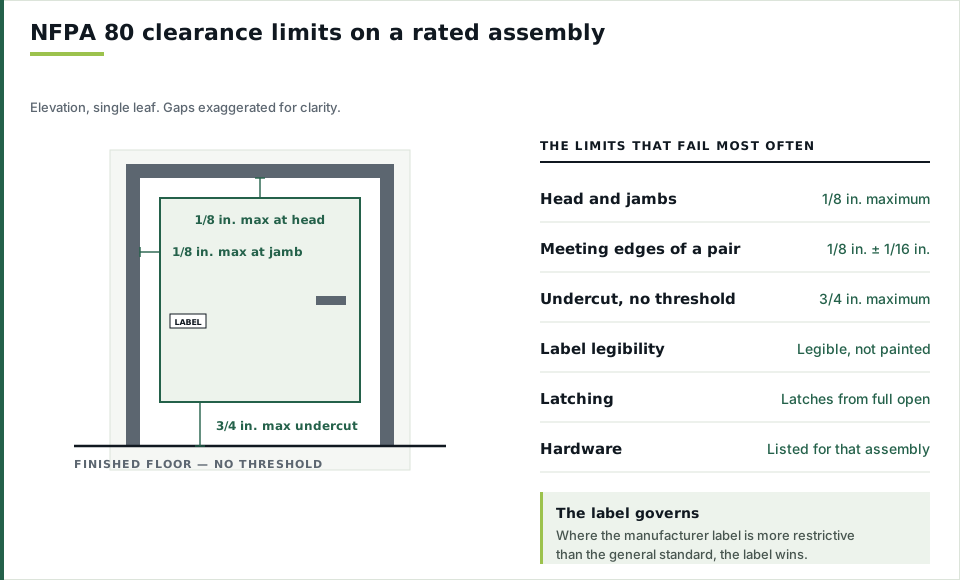
Enter gaps you have measured in sixteenths of an inch. The result is checked against the limits in NFPA 80 section 6.3.1.7 and tells you which measurement is outside its limit and by how much. Nothing is sent anywhere and nothing is stored.
| Measurement | Limit |
|---|---|
| Head | 1/8 in. maximum |
| Jambs | 1/8 in. maximum |
| Meeting edges of a pair | 1/8 in. plus a 1/16 in. tolerance, so 3/16 in. is the outside figure |
| Undercut, no threshold | 3/4 in. maximum |
A manufacturer's label may impose a tighter limit than the general standard. Where the label and the standard disagree, the label governs and this check does not know what your label says.
What gets checked, and against what
The inspection follows the criteria in NFPA 80 for the assembly type in front of us. Swinging assemblies and rolling steel fire doors are different procedures producing different records, and a building with both needs both. The recurring theme across every finding below is that the manufacturer's label governs: where a label imposes a tighter limit than the general standard, the label is the number, and citing the general rule against a more restrictive label is a common way to produce a wrong report.
How inspection and remediation are priced
| Line | Basis | Notes |
|---|---|---|
| Annual inspection, per opening | Per-opening rate, banded by volume | Rate falls as count rises |
| First-year survey uplift | One-time, per building | Numbering, tagging, and baseline record creation |
| Adjustment-level corrections | Time and material on the same visit | Closer settings, latch alignment, hinge tightening |
| Hardware replacement | Parts plus labor | Listed product only; lead time stated before approval |
| Leaf or frame replacement | Quoted separately | Follows a measured opening, not the inspection sheet alone |
| Rolling steel drop test | Priced per door | Distinct procedure and a distinct record |
Corrections are not bundled into the inspection price and are not assumed. The finding sheet is written so you can price it elsewhere, and some buildings do.
How an inspection runs
-
01Establish scope and countHow many rated openings, of what types, and where. Counts are usually low. Call (984) 402-1347
-
02Walk and recordEvery opening numbered, tagged, measured, and photographed against the NFPA 80 criteria for its assembly type.
-
03Rank and reportDeficiencies sorted by exposure, with the correction named and the reason given in plain language.
-
04Correct and appendApproved corrections scheduled, completed, and written back against the opening they belong to.
What you get that you would not get elsewhere
Other work on the same openings
Talk it through before anybody quotes it
Bring your opening count, whether any documentation exists, and when the last inspection happened if anyone knows.