Frequently Asked Questions
Anything not covered here, ask on the call.
Codes, ratings, and inspections
Who is allowed to inspect a fire door assembly?
NFPA 80 requires the inspection be performed by someone with knowledge and understanding of the operating components of the type of door being subjected to testing. It does not name a single certification. Ask any vendor what their inspectors' qualifications are and expect a specific answer rather than a logo.
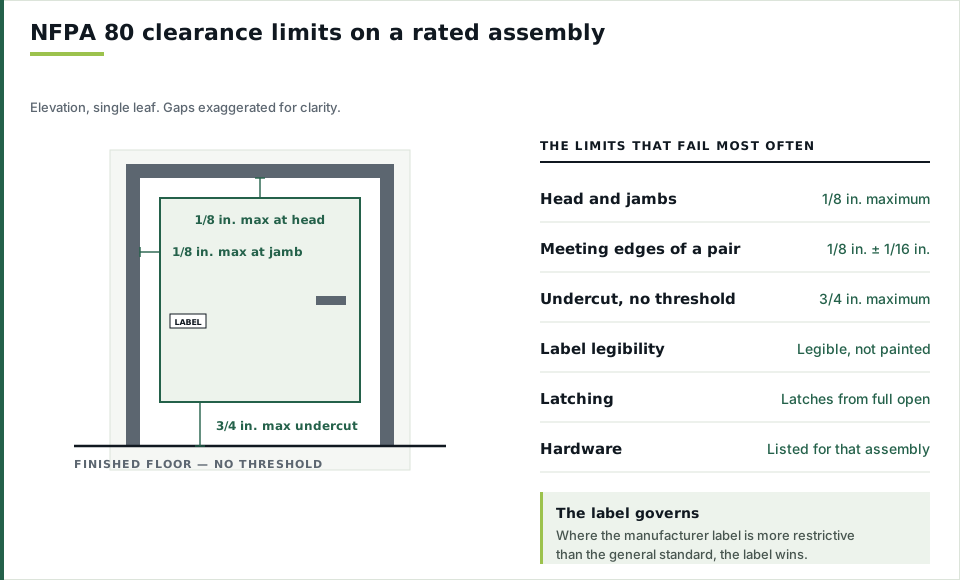
What are the actual clearance limits?
For most rated swinging assemblies: 1/8 inch at the head and jambs, 1/8 inch with a 1/16 inch tolerance at the meeting edges of a pair, and a maximum 3/4 inch undercut where no threshold is present. Those come from NFPA 80 section 6.3.1.7. The important caveat is that a manufacturer label may be more restrictive, and where it is, the label wins.
We put down new flooring last year. Does that matter?
It matters more than almost anything else on this list. New flooring raises the finished floor and shrinks the undercut, or a removed threshold enlarges it. Either way the measurement on file is now wrong, and undercut is one of the most commonly cited findings there is.
Somebody drilled our fire door for a new lockset. Is that a problem?
Potentially a serious one. Field modifications outside what the listing permits can void the rating on the whole assembly, and a hole through a steel fire door cannot be filled with body filler and called repaired. It needs listed repair material or a replacement leaf. This is the single most common way a compliant opening quietly stops being one.
How slowly does a door have to close?
ADA 2010 Standards section 404.2.8.1 sets a five second minimum from 90 degrees to 12 degrees from the latch. Spring hinges get 1.5 seconds minimum from 70 degrees under 404.2.8.2.
Our exterior door is heavy to pull. Is that an ADA violation?
Probably not, and this trips people up. The 5 lbf maximum in ADA 404.2.9 applies to interior hinged doors and to sliding or folding doors. Exterior doors are not given a figure in the ADA standards, and fire doors are exempt because they need enough force to latch positively. IBC caps egress doors at 30 lbf to set in motion and 15 lbf to swing fully open.
Do rolling steel fire doors need anything different?
Yes. They get an annual drop test, which is a distinct procedure from the swinging door inspection and produces its own record.
Can a magnetic lock be used on an exit?
Sometimes, under specific conditions, and it is worth getting right. Egress requirements govern what release arrangement is acceptable, and the answer differs by occupancy and by which code edition the AHJ has adopted. It is a conversation to have before the hardware is ordered rather than after it is on the wall.
Scope, scheduling, and cost
What does a survey actually involve?
A walk of every opening in scope. Each one gets a number, a photograph, a condition note, measurements where measurements matter, and its label details if it carries a label. What comes back is a register with the findings ranked by exposure.
How long should we set aside for a survey pass?
For a single-tenant building of forty to sixty openings, usually a day. Large portfolios get split across visits and scheduled against your access windows rather than ours.
Do you stock parts?
Common closers, strikes, hinges, thresholds, and weatherstripping, yes. Rated assemblies, specific exit device trims, and anything with a lead time gets ordered, and you get told the lead time before you approve rather than after.
Can you work after hours?
Regularly, and for retail and healthcare it is often the only sensible option. It changes the rate and it needs scheduling further out.
What do you not do?
Automatic pedestrian door operators, glass and glazing replacement, dock levellers and pit equipment, and gate operators. Those get referred to people who do them every day.
Do you take one-off calls or only agreements?
Both, though the register model works better over time.
Working with your building
Our landlord has to approve any work on the entrance. Does that slow things down?
Only if we find out about it late. Tell the coordinator on the first call and the approval runs in parallel with scheduling instead of after it.
Can you invoice against a purchase order?
Yes. Provide the reference at scheduling and it carries through onto the invoice.
We use a vendor management portal. Will that be a problem?
No. Send the onboarding link and expect a few days for insurance documentation to clear the portal's review, which is usually the slowest part.
Who is on site?
A named technician from the crew listed on the team page, not a rotating subcontractor pool. If a specialty piece of scope needs somebody outside the company, you are told before they arrive.
Talk it through before anybody quotes it
Still unsure whether something is in scope. Describe it and you will get a straight answer.